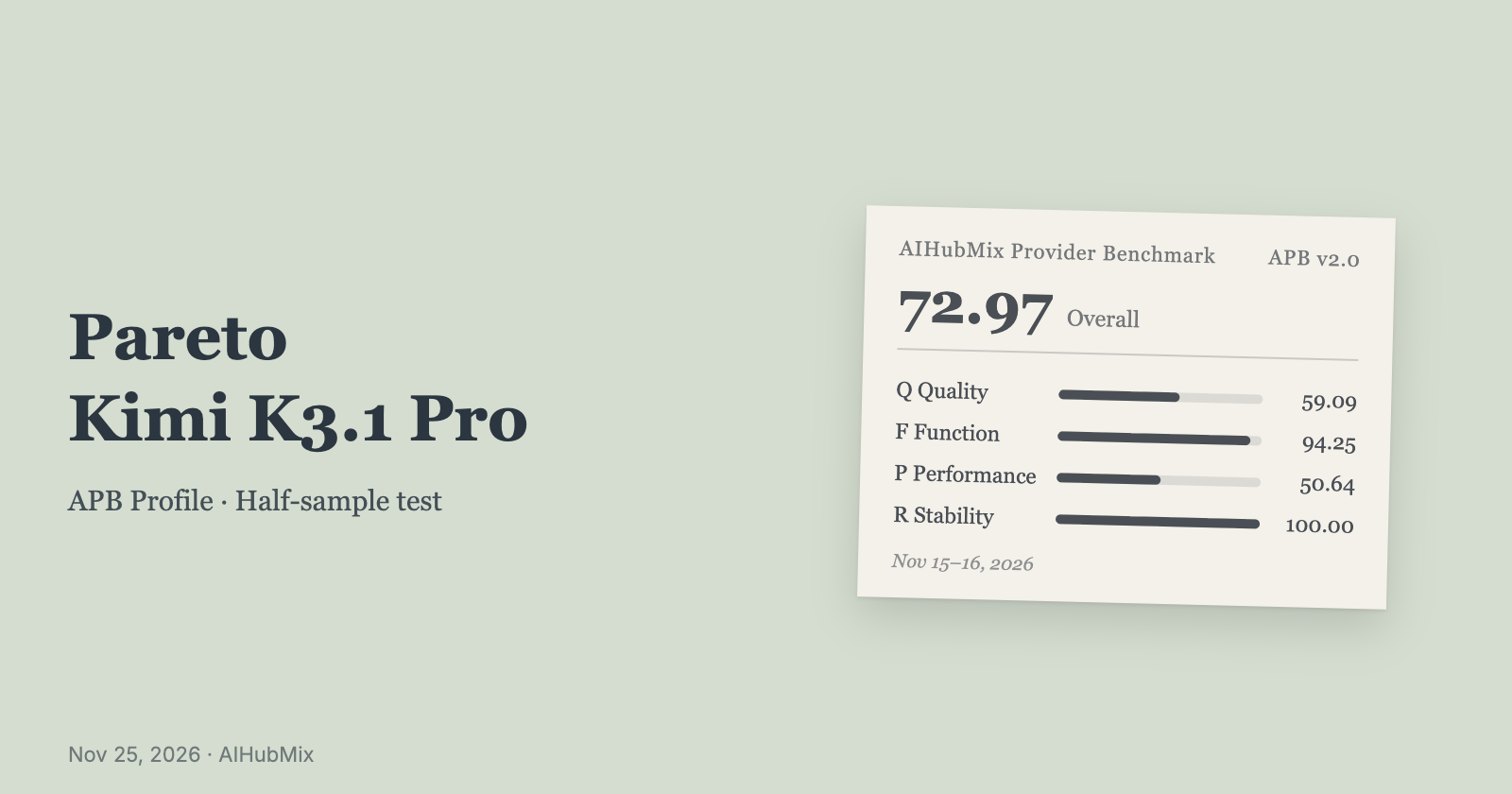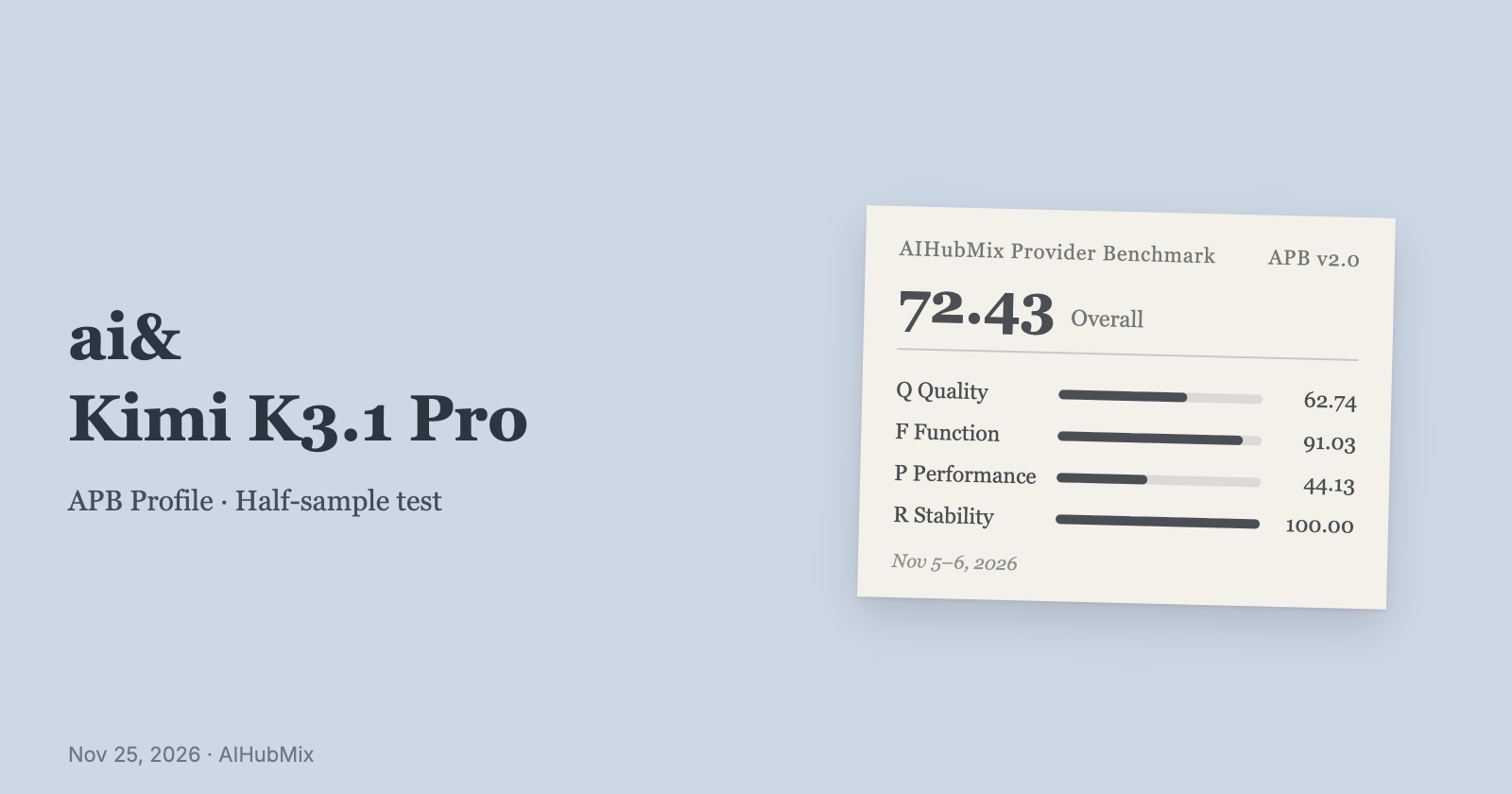
Kimi K3.1 Pro on ai& took about 6 seconds to start a reply to one question
On ai&, Kimi K3.1 Pro started answering after a median of 5.91 seconds with one request at a time. With ten requests at once, the median rose to 8.57 seconds.
Announcements, tutorials, model analysis, and product updates from AIHubMix.

On ai&, Kimi K3.1 Pro started answering after a median of 5.91 seconds with one request at a time. With ten requests at once, the median rose to 8.57 seconds.

On Pareto, Kimi K3.1 Pro gave 335 correct answers to 955 hard reasoning questions. Service failures left 211 requests without a usable answer.

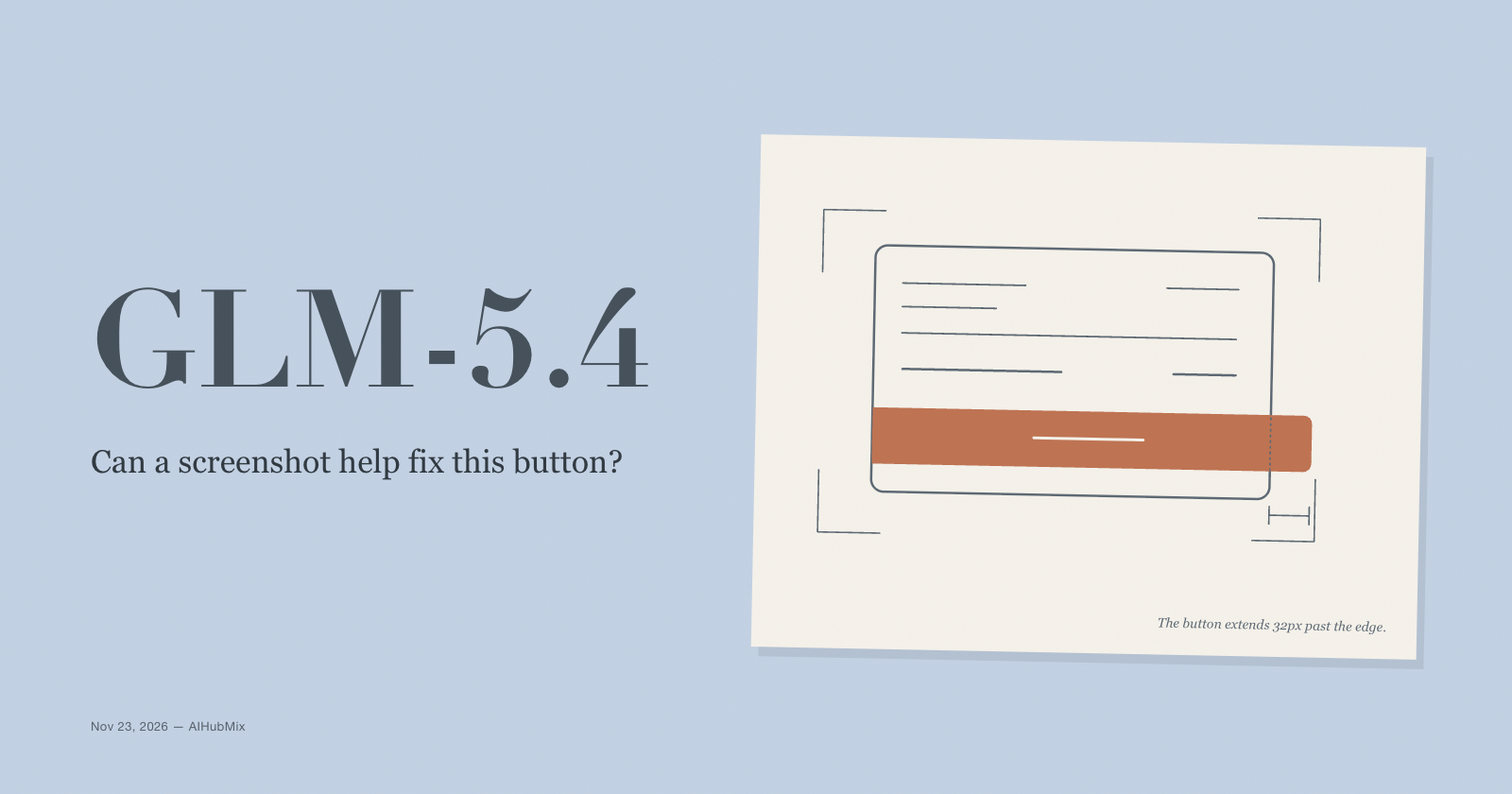
GLM-5.4 fixed a 32px checkout button overflow with or without a screenshot. Only the image reply read the order reference. See the before and after in Chrome.

You’ve asked Claude Code or Codex to check this week’s sales spreadsheets. There are still a few files to go through, and you need to head out. When the job runs on your laptop, you have a choice to make on your way out the door: leave it open or finish later. AIHubMix Cloud gives your agent a cloud computer that stays on. Put the spreadsheets there and start the job. You can quit the local app and close your laptop. If you remember on the way out that one file shouldn’t count toward the total

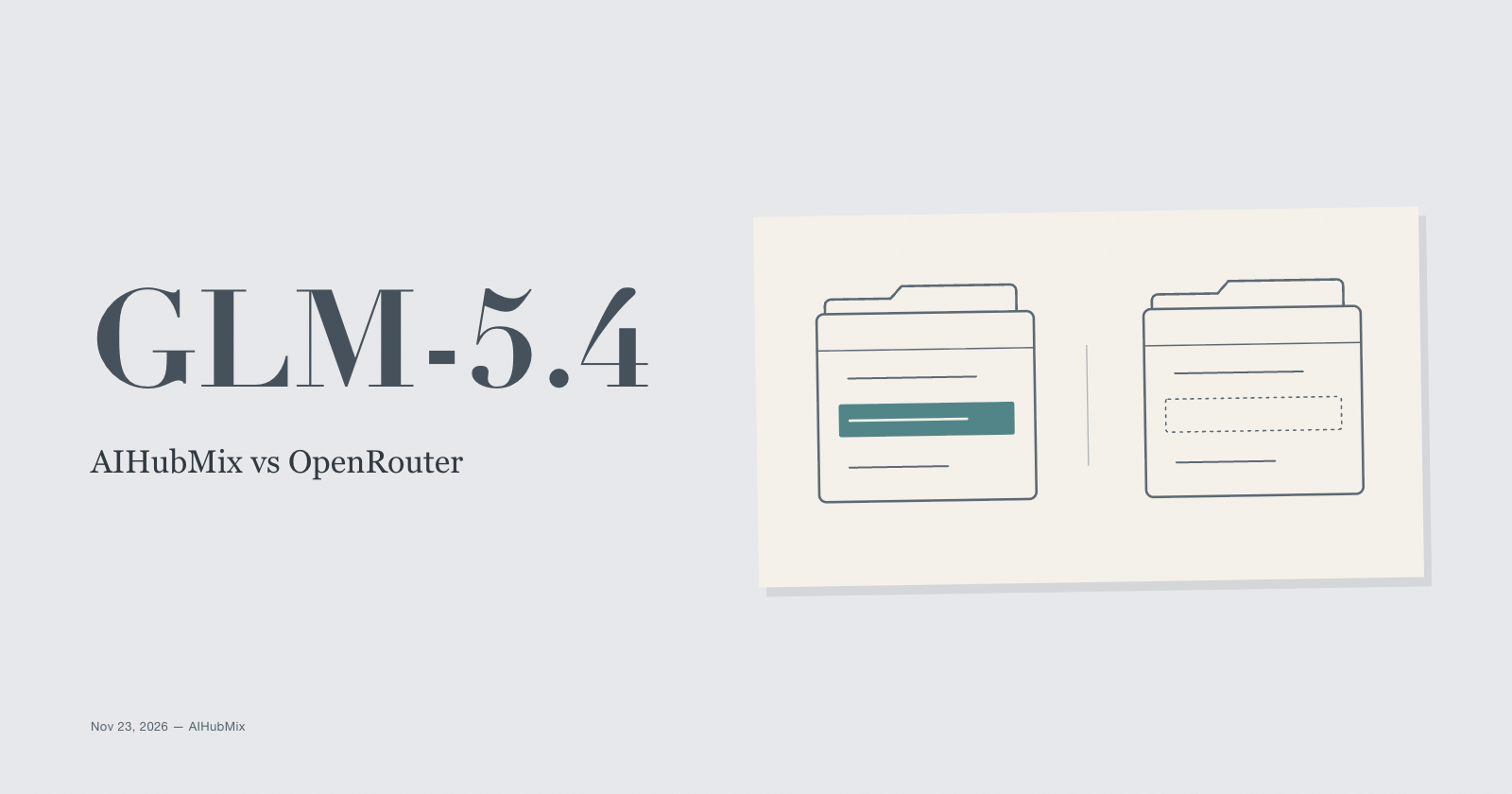
AIHubMix successfully tested GLM-5.4 with model ID coding-glm-5.4. See its token prices and what OpenRouter’s public catalog listed on November 23.

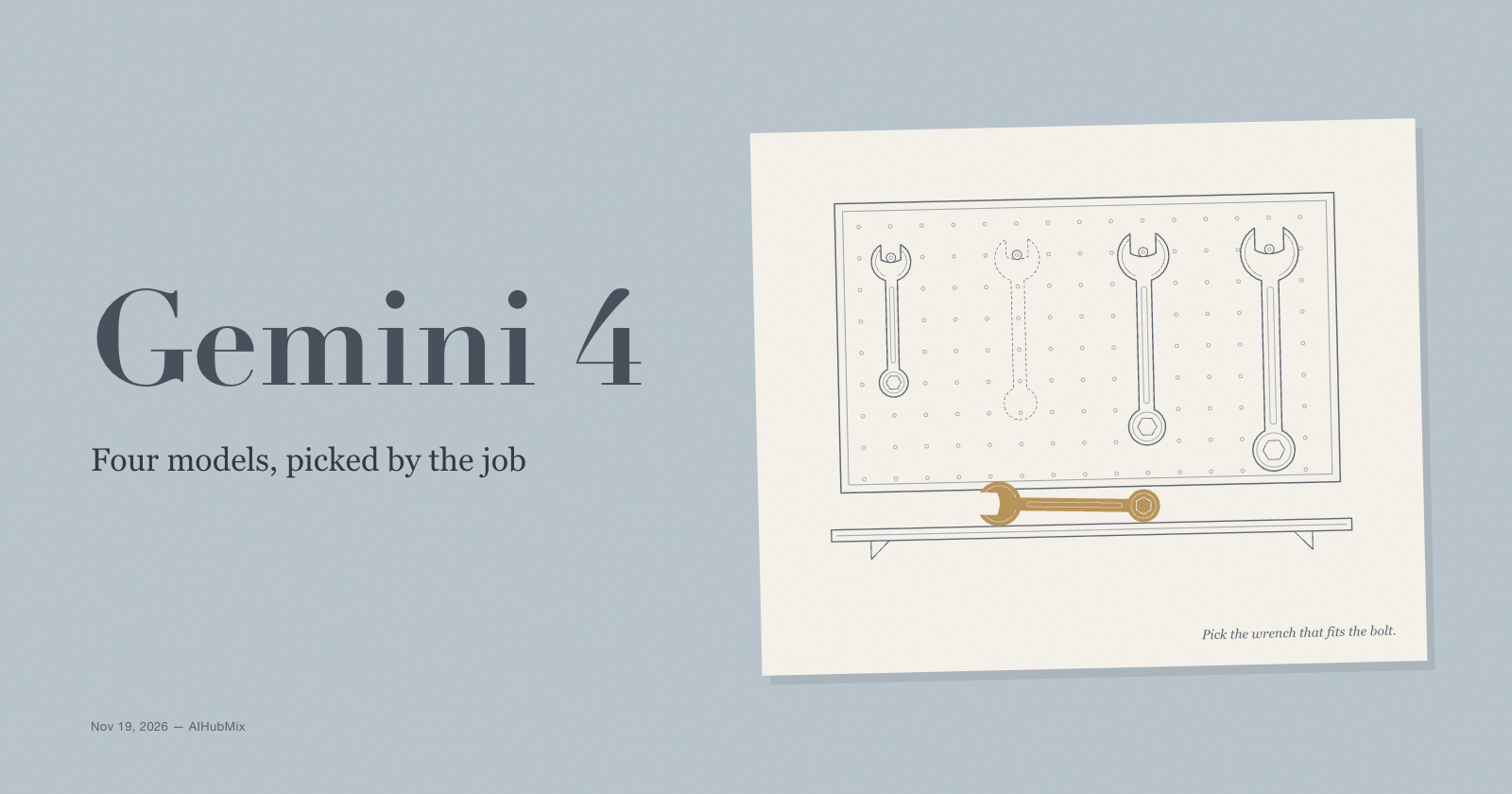
Google released four Gemini 4 models in five weeks: Argon on October 13, Carbon on November 10, Hydrogen on November 12 and Neon on November 18. They share one API shape, a 1M-token window and the same tools. They differ in how much they think per turn, how fast they answer and what they cost. On Artificial Analysis's measurements, the family now sorts itself: * Hydrogen for everyday and high-volume work. Its default high scores 50.8 at $1.87 per task, and it's the fastest per token. * Neo

Google names Gemini 4 Neon as the upgrade target for Gemini 3.1 Pro, for general coding work on Gemini 4 Argon, and for complex coding or science work on Gemini 3.8 Flash. Changing the model string to gemini-4-neon is the easy part. The rest falls into four groups. * Silent: the default thinking level is now high. Argon and 3.8 Flash defaulted to medium. Unless you set a level, each request thinks more than it would at medium. For 3.8 Flash users that means higher bills; for Argon users the p

Gemini 4 Neon isn't a new model line. Google's model card says so in one line: "Gemini 4 Neon is adapted from Gemini 4 Carbon." On Artificial Analysis, Neon at its default high setting scores 59.6 on the Intelligence Index against 60.0 for Carbon High, and finishes an average task in 14.8 minutes against 36.6. The price comparison depends on the date. Today Neon costs 50% more per token than Carbon, which is still on introductory rates. On December 1 Carbon's rates double, and Neon's $3/$15 be

Some expected GLM-5.5. Zhipu released GLM-5.4 with vision for coding. See who gets more weekly quota and how to call it on AIHubMix, with token prices.

Same $8/$40 base rates, different tradeoffs. Compare Astra and Fable 5.2 on coding, legal tasks, cache rules, and long-horizon benchmark caveats.

Sol costs one-quarter of Astra per token. Compare repository coding, security and visual-task evidence to decide when the flagship premium is justified.