AIHubMix Blog

Announcements, tutorials, model analysis, and product updates from AIHubMix.

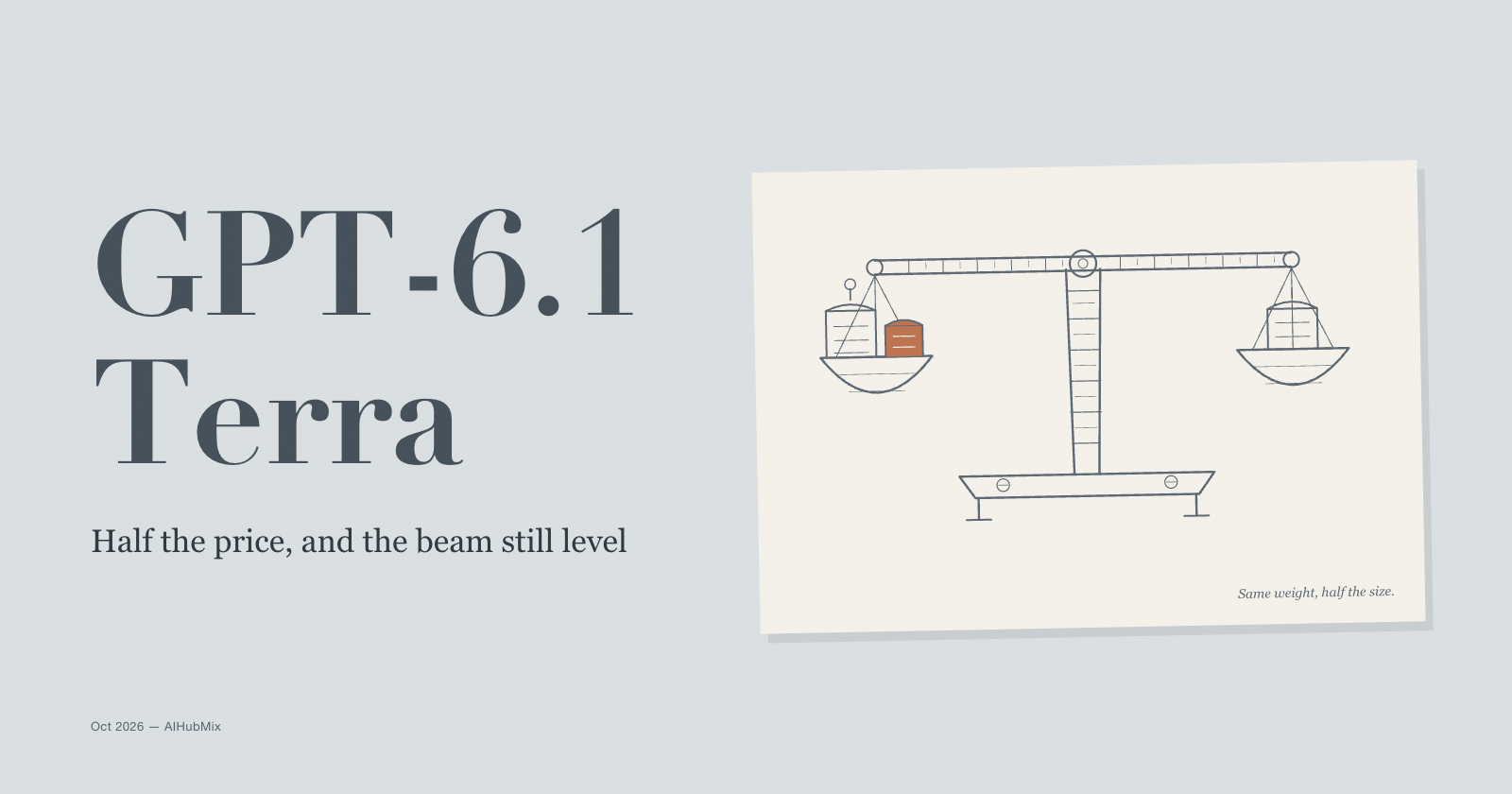
  • GPT-6.1 Terra vs GPT-5.6 Terra: Half the Price, What Changed, and Who Should Switch

    GPT-6.1 Terra vs GPT-5.6 Terra: Half the Price, What Changed, and Who Should Switch

    OpenAI released GPT-6.1 Terra on 26 October 2026. It sits below Sol and Astra in the GPT-6 family, and it costs less than its predecessor, GPT-5.6 Terra: $1 per million input tokens instead of $2, and $5 per million output tokens instead of $12. The launch post pitches it for visual reasoning, computer use and writing. OpenAI's benchmarks show it reading screens and images better, and both OpenAI's and independent tests show far fewer factual errors. The short answer for GPT-5.6 Terra users:

    10 min readNews
  • AIHubMix vs OpenRouter (2026): An OpenRouter Alternative Without the 5.5% Credit Fee

    AIHubMix vs OpenRouter (2026): An OpenRouter Alternative Without the 5.5% Credit Fee

    OpenRouter and AIHubMix are both one-key gateways to more than 500 models, and on Claude, GPT, Gemini and Grok they charge the same per-token price: the vendor's list price. So the comparison isn't about the sticker price. It's about what you pay on top of it, how open-weight models get routed, which wire protocols one key speaks, and where your fallback rules live. This page lays those differences out, including the places where OpenRouter is the better pick. The short answer * Pick AIH

    10 min readOpinion
  • Kimi K3.1 Pro vs K3.1 Pro Highspeed: Is 2–3× the Speed Worth 2× the Price?

    Kimi K3.1 Pro vs K3.1 Pro Highspeed: Is 2–3× the Speed Worth 2× the Price?

    Kimi K3.1 Pro Highspeed is not a smarter model. Moonshot AI describes it as K3.1 Pro "with identical model capabilities", running at "approximately 2–3× the speed". At Moonshot's list price it costs exactly twice as much per input and output token. What you buy is wall-clock time, and nothing else. The short answer: pay for Highspeed when a person is watching the stream, as in an interactive coding session or a chat feature your users wait on. Stay on Pro for work that runs unattended or spend

    11 min readOpinion
  • Kimi K3.1 Pro vs Qwen 4 vs Claude Fable 5.5: Front-End Quality, Cost per Task, and the Hype Checked

    Kimi K3.1 Pro vs Qwen 4 vs Claude Fable 5.5: Front-End Quality, Cost per Task, and the Hype Checked

    Three launches converged on the same October week. On 22 October two anonymous models, Kibitz and Kalmia, appeared in Arena's Code Arena a few hours apart. Tokenizer tests tied them to Moonshot's Kimi and Alibaba's Qwen. A day later, Kimi posted a teaser of K3.1 writing a Three.js scene, and soon after the model was out: Moonshot's launch post introduced Kimi K3.1 Pro in the Kimi app, Kimi Code and the Kimi API. On Anthropic's side, a claude-fable-5-5 listing surfaced in a cloud catalogue on 13

    14 min readOpinion
  • Migrating to Kimi K3.1 Pro: Fix the 400s, Mind the Max-Effort Default, and Don't Mistype Highspeed

    Migrating to Kimi K3.1 Pro: Fix the 400s, Mind the Max-Effort Default, and Don't Mistype Highspeed

    Kimi K3.1 Pro is live in Kimi Code, on Moonshot's API as kimi-k3.1-pro, and on AIHubMix under the same ID. Moonshot gives it the same parameter constraints as Kimi K3, so code that already runs on K3 should move with a model-ID change and a fresh session. Code written for K2.x now has a deadline on Moonshot's platform: Moonshot closes the K2 series to newly registered users there on 31 October 2026 and plans to retire it by the end of December. That code is also the most likely to break, because

    18 min readTutorial
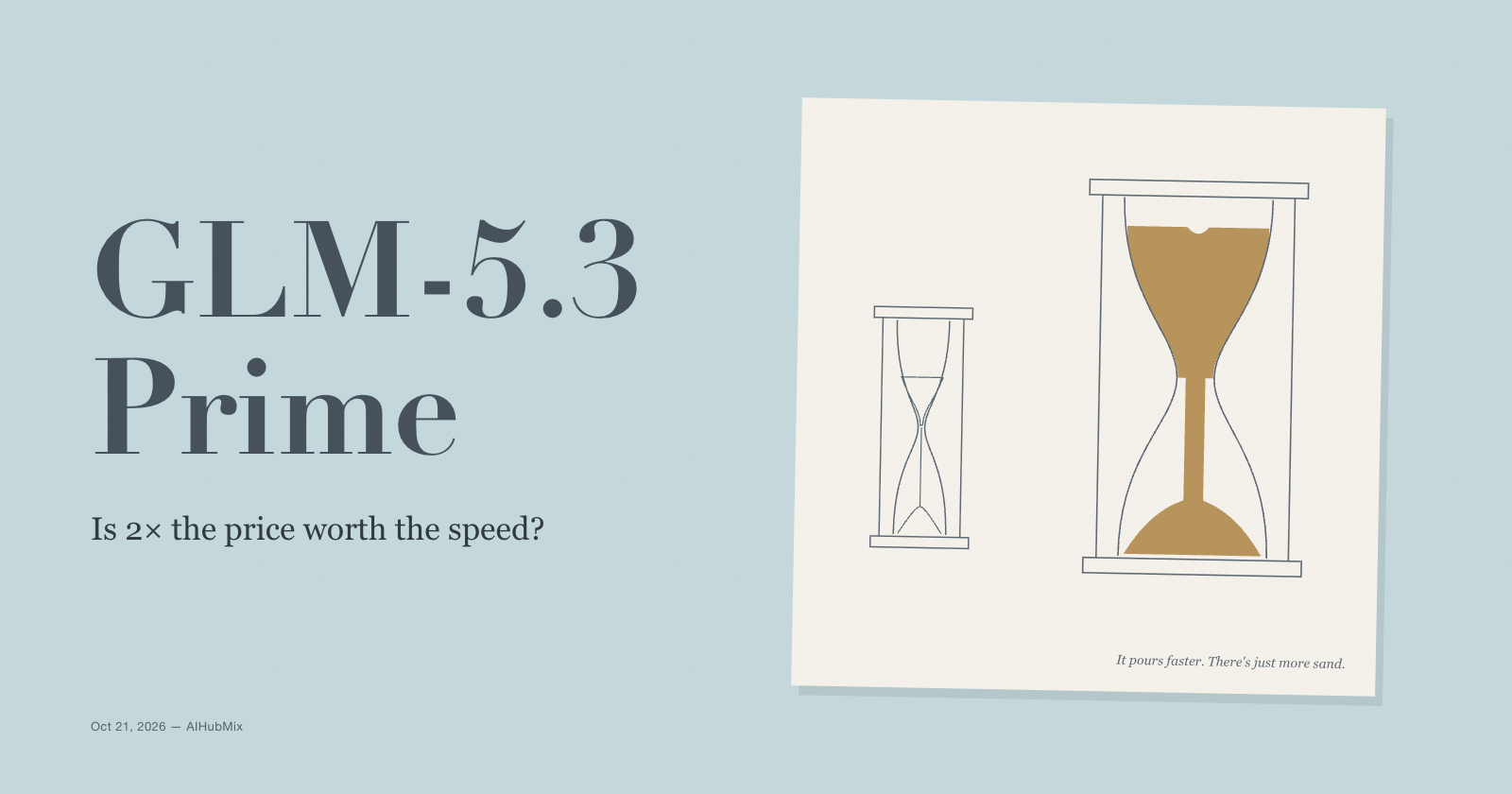
  • GLM-5.3 Prime vs GLM-5.3: Is 2× the Price Worth the Speed?

    GLM-5.3 Prime vs GLM-5.3: Is 2× the Price Worth the Speed?

    GLM-5.3 Prime is not a new model. It runs the same GLM-5.3 weights in a faster serving mode: Alibaba Cloud Model Studio's Prime mode, which promises 1.5 to 2 times the output speed of the standard API. The answers should be the same quality. What you pay extra for is tokens per second. On AIHubMix, glm-5.3-prime costs $2.35 per million input tokens and $8.23 per million output tokens, about 2.1× what GLM-5.3 costs today. The short answer: * Worth it when a person or an agent loop sits waiti

    10 min readOpinion
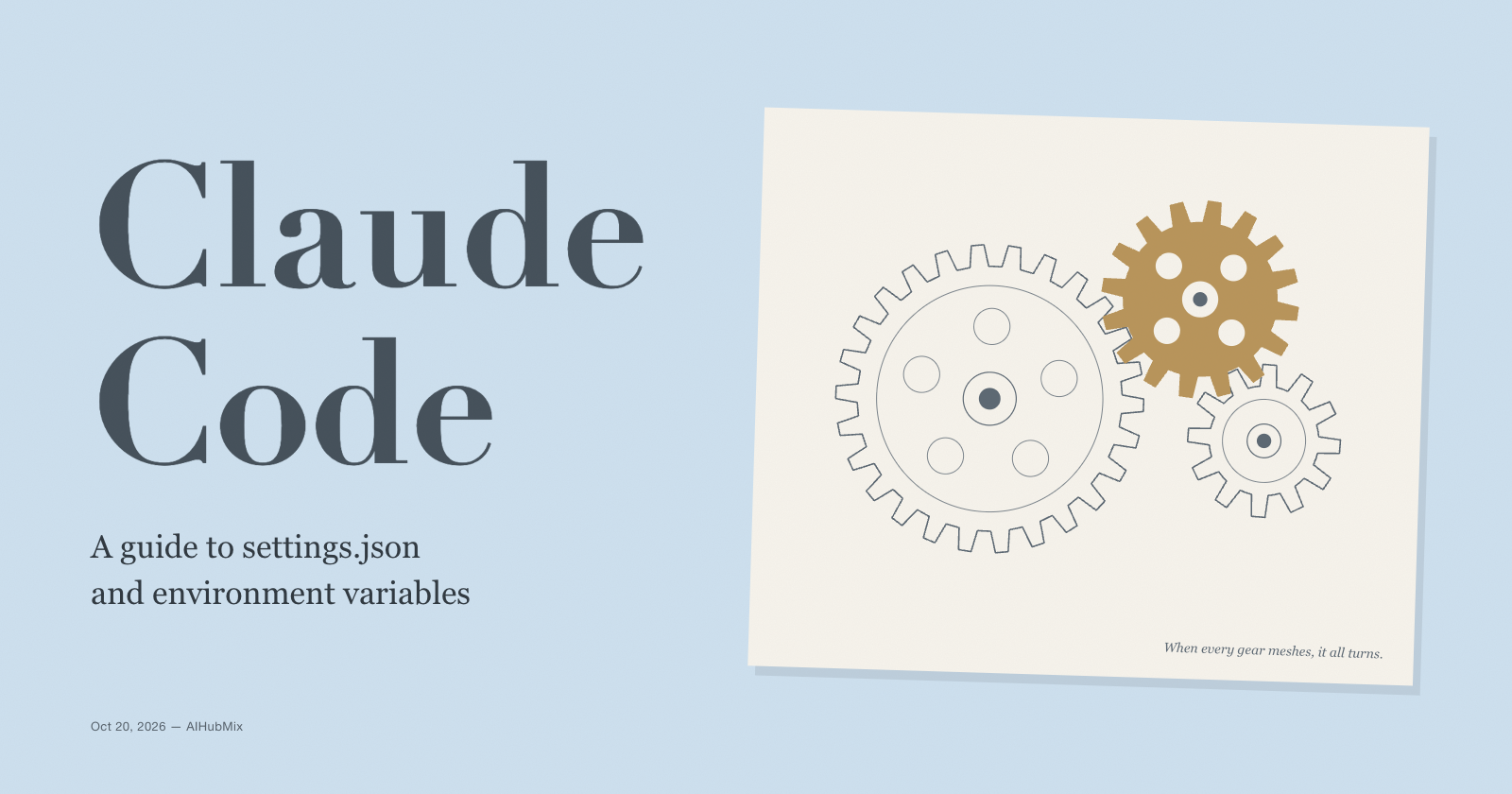
  • Claude Code settings.json and Environment Variables: Base URL, Auth Token and Model

    Claude Code settings.json and Environment Variables: Base URL, Auth Token and Model

    Claude Code takes its configuration from JSON settings files and from environment variables. To run it through a gateway instead of Anthropic's API, you need two variables, ANTHROPIC_BASE_URL and a token, and usually a model. The variables are simple. What confuses people is where to put them, because the same variable can sit in your shell profile, in several settings.json files and in VS Code's settings. This guide starts with a setup that works, then explains where the files live, which val

    7 min readTutorial
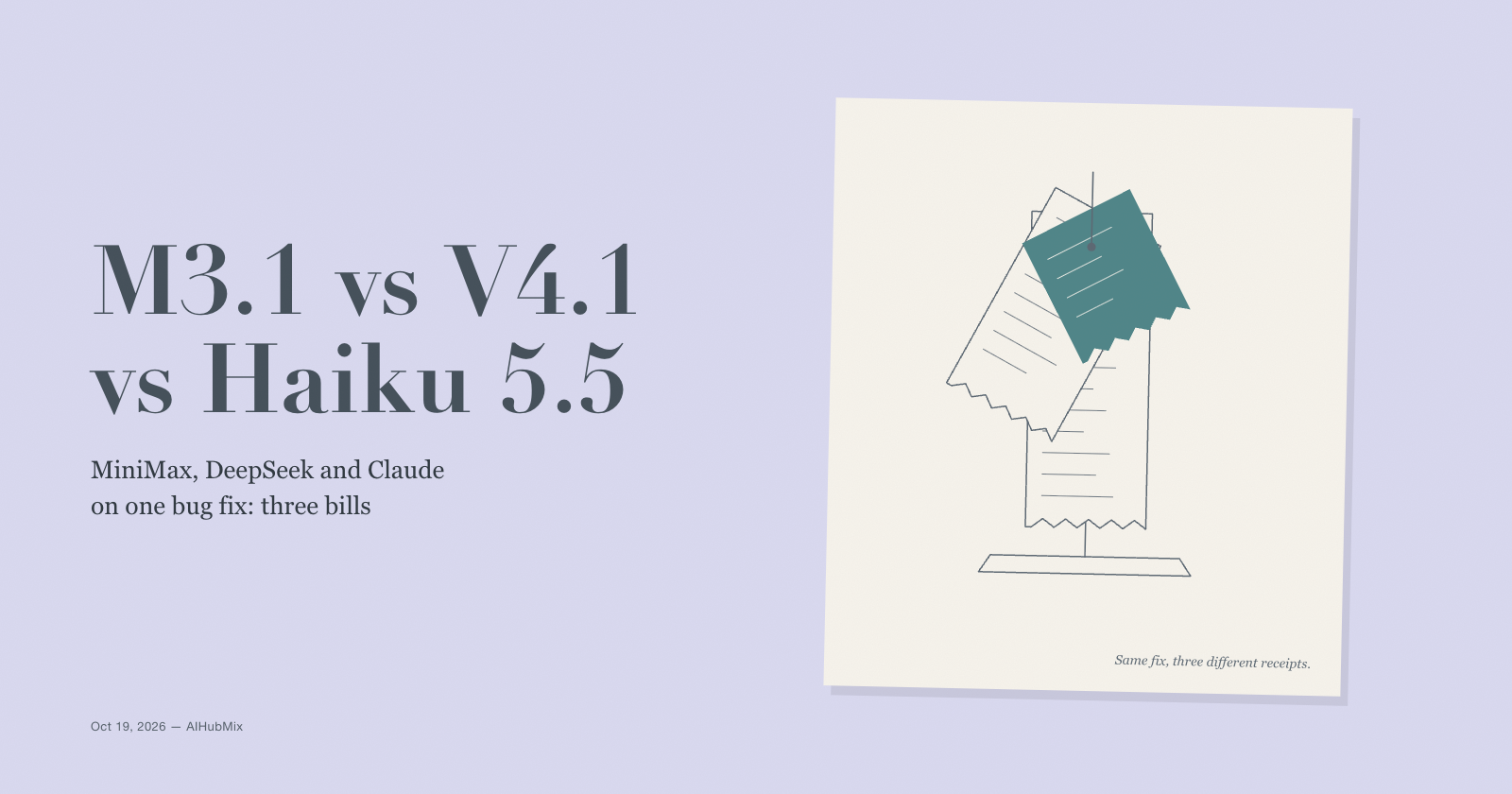
  • MiniMax M3.1 Flash vs DeepSeek V4.1 Flash vs Claude Haiku 5.5: One Bug Fix, Three Bills

    MiniMax M3.1 Flash vs DeepSeek V4.1 Flash vs Claude Haiku 5.5: One Bug Fix, Three Bills

    Three cheap coding models shipped within four weeks of each other: DeepSeek V4.1 Flash (with its 1017 update), Claude Haiku 5.5, and MiniMax M3.1 Flash, which spent its first week as the anonymous Space Bunny. All three have a 1M-token context window and cost between $0.10 and $0.17 per million input tokens. So which one should you use for routine coding? AIHubMix gave all three the same bug fix, three times each, through one API key. Each model fixed the bug correctly every time, but the bill

    7 min readOpinion